

One month ago, the United States Federal Communications Commission put forth a ban on the sale of all Wi-Fi routers made outside the US, giving manufacturers the option to apply for a conditional approval exemption on the agency’s website.
Let’s talk about what this ban is going to mean to your business (and to your entire team’s personal lives) as things progress. Fair warning, things aren’t going to be simple.
The Federal Trade Commission has spent years providing businesses with guidance and advice concerning their security. Now, this guidance has converted into enforceable mandates.
In short, your business needs to have systems and protections in place—not plans—in order to abide by last month’s executive order that focuses on the prevention of cybercrime and fraud. Let’s touch on what needs to be accomplished in order for you to do so.
Do you look at your technology as a cost center to be managed, or as a springboard for new revenue? If you’ve been following us for a while, you know we like to think of it as the latter. Small businesses spend much of their IT budget just to keep the lights on, stuck in an endless cycle of “surviving” rather than “thriving.” But with a virtual CIO, or vCIO, your business can reframe the conversation surrounding technology and look at it as an endless realm of opportunity rather than an endless loop of costs.
Imagine one of your top employees suddenly stops caring. They aren’t leaving the company—they’re just leaving the conversation.
This is the reality of quiet quitting, and it often starts with something as small as a "ping." We’re talking about notification fatigue, the silent productivity killer. Let’s break down why your team is drowning in pings and how you can throw them a lifeline.
Software as a Service (SaaS) is a double-edged sword. When managed well, it’s a high-performance engine for growth; when ignored, it becomes a silent bleeder, slowly draining your budget through automated monthly charges that no one is tracking.
The question isn't whether you need SaaS—you do. The question is whether your SaaS is working for you, or if you’re just working to pay for it.
The Trojan Horse didn’t succeed because the Grecian armies broke down the walls of Troy; it succeeded because the Trojans fell for the Greek army’s trick and brought the secret war machine—with a small group of Greek soldiers—inside their walls. It was a tactically brilliant plan, and ended what was reportedly a decade-long siege in a matter of hours.
Whether or not the original story is based in truth, your business is potentially in danger from a similar issue: a threat coming in on what seems to be a trustworthy package. The difference is that this time, the package is a platform or tool you’ve procured from a third-party vendor.
Does your business operate in the moment, or does it prioritize what’s just around the corner? As a business owner, you have a tricky balance to strike between the two, and where technology is concerned, the answer is not always so clear-cut. But it’s generally better for your business to look at technology management with the perspective offered by an IT roadmap to inform your decision-making, from everyday implementations to major deployments.
Forget the sophisticated cyber-attacks you see in the news. Often, the real business killer is much more mundane: that aging server in your storage room. Many business owners assume that if it’s still humming, it’s still working. Unfortunately, hardware doesn’t just retire; it crashes; usually at the worst possible moment. When a primary server fails, it doesn't just take your data with it; it takes away your ability to compete.
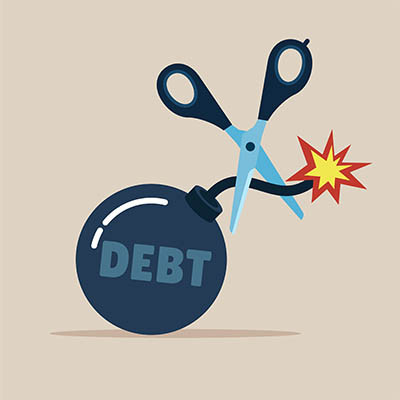
Is your network infrastructure a Frankenstein’s monster of mismatched tools and quick fixes? This is what most small business IT looks like; companies adopt solutions without a thought as to how they are supposed to work together, and it ultimately ends up impacting operations. This creates tech debt, and not the monetary kind, that is hard to bounce back from without taking a serious look at your IT practices.
It’s undeniable that artificial intelligence is a big part of doing business in 2026. Given this, it is not surprising that many products are being developed to push the technology into areas of business it hasn’t touched. Today, we are going to tell you about the difference between AI models and why one man’s great idea could be the thing that set AI back.
In its current state, artificial intelligence takes whatever you tell it very literally. As such, it is very easy to misdirect it into digital rabbit holes… which is the last thing you want, when time is very much money to your business. This is precisely why it is so crucial that we become adept at properly prompting the AI models we use. Too many hallucinations (responses that share inaccurate or unreliable information) simply waste time and money, but the better the prompt, the less prone the AI will be to hallucinate.
Let’s go over some of the best practices to keep in mind as you draft your prompts.
Does the idea of cybersecurity strike fear into your heart? We know it’s not every business’ specialty, but that doesn’t make it any less important for companies like yours to consider. Today, we want to make it as easy as possible for your employees to practice appropriate cybersecurity measures, and that starts with a simple one-page cybersecurity cheat sheet.
The concept of backups isn’t new. A lot of people have a spare key, and the idea of a spare tire is pretty universally known. While either example could easily make or break someone’s day, the stakes are exponentially higher when business data is involved.
This is why a comprehensive business continuity plan—including a disaster recovery strategy, complete with backup readiness—is essential.
We will be the first to admit it: we are obsessed with security.
In an era where cybercriminals are more sophisticated and persistent than ever, that obsession is a necessity. Modern security requires a fundamental shift in mindset: you cannot implicitly trust anyone. Not outside hackers, and—uncomfortable as it may be—not even the people inside your organization.
This trust-no-one approach is the foundation of Zero-Trust Security.
Of all the features and capabilities modern workplace software offers, it is very possible that the spreadsheet tool offers the most… with relatively few people realizing what they have access to within it. There are many very smart inclusions that can make life much easier for those who know what they’re doing.
For example, if your data is formatted correctly, it is easy enough to identify which day of the week a given date falls on.
Working in IT, our job is to worry so you don’t have to. The things keeping us up at night in 2026 are vastly different from the headaches of five or ten years ago. Thanks to the invisible power of AI-driven automation and mature cloud ecosystems, many of the manual, soul-crushing tasks that used to define IT support have essentially vanished.
The greatest vulnerability in your business’ network security actually has nothing to do at all with the systems in place. It’s actually your employees who will ultimately put your company at risk. Hackers rely on the fact that your team is busy, stressed, and trying to be helpful, and this helps hackers engineer moments where employees will click first and ask questions later, much to your business’ detriment.
Is your business still relying on a patchwork system of spreadsheets, sticky notes, and emails to manage all of its customer relationships? This type of manual work is not cheaper or more efficient; it only accumulates organizational debt that will eventually come due. Poor customer relationship management results in hundreds of hours of lost productivity throughout the year, directly translating into lost sales and profits for your business.